

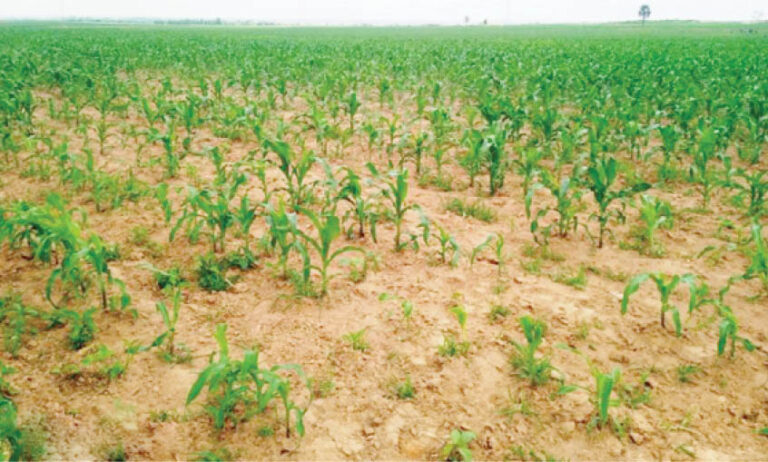
More than 3.7 million people in North-East Nigeria are suffering from food insecurity, the International Committee of the Red Cross (ICRC) has warned.
The warning came as the region entered the lean season with families’ food stocks collapsing and access to farmland still constrained by insecurity and displacement.
Many of those at risk are small holder farmers who once fed their communities but now struggle to reach or cultivate their fields.
Communities across Borno, Yobe, Gombe, Bauchi and Taraba states told The PUNCH that hunger is tightening its grip.
“Right now, we face severe food shortages… Farming is the only solution to hunger,” said Modu Umar, a community leader in Dikwa, Borno State.
From Gajibo, also in Borno State, 70 year old farmer Churi Ibrahim added, “Some people trek three hours to reach their farms… sometimes, we don’t even get one meal a day.”
The Head of the ICRC office in Maiduguri, Borno State, Diana Japaridze, said, “This is when households must start purchasing food, but many conflict affected families can’t afford much. They’re forced to drastically limit their intake.”
To bolster local production, the ICRC said over 21,000 farming households had received season appropriate seeds and planting tools for both rainy and dry season cultivation, including rice, maize, tomato and okra to improve diets.
The food crisis is also fuelling rising levels of malnutrition, particularly among children under five and pregnant or breastfeeding women.
In response, the ICRC said it was supporting malnutrition stabilisation centres and conducting community education to help families care for vulnerable children.
At the national level, the ICRC has partnered with the National Agricultural Seed Council to complete repairs on a vital water source.
This facility now ensures an uninterrupted water supply for NASC’s seed testing and greenhouse operations, a move aimed at strengthening Nigeria’s broader agricultural system.
To curb food insecurity, the Executive Secretary of the Yobe State Emergency Management Agency, Mohammed Goje, said on July 2, 2025, the state distributed $25,000 (approximately N38.3m) to each of 101 communities under the Agro-Climatic Resilience in Semi-Arid Landscapes Project, totalling $2,525,000 (approximately N3.8bn).
In an exclusive interview with newsmen in Damaturu, he said,
“This World Bank-supported, interest-free loan benefits 7,340 direct beneficiaries (4,857 males and 2,483 females) across 17 local government areas.
“The initiative aims to enhance agricultural resilience, stimulate economic activities, and promote climate-smart agriculture.”
He noted that the government had taken measures to address the issue by banning farming in roadside and rocky areas to provide grazing fields for herders.
Sambo expressed support for the policy and urged farmers to comply.
According to him, he said:
“In Bauchi State, it is usually a minor case of farmer-herder clashes and this time around, the government has since taken measures to address it.
“If farmers should cultivate rocky and road areas, then the herder will be forced to feed on farms.
“The rocky areas and roadside are the only available areas left for the herders to feed their animals during the rainy season.”
A farmer in Gombe State, Danladi Wala, gave credence to the ICRC report.
Wala said, “Why won’t there be food insecurity in the region when there is no deliberate effort by the government to support farmers?